
Fabric Factory Growth: Connect Acquisition, Sales and Delivery
A fabric factory can have unused capacity while its sales team is busy. It can also have a full inquiry inbox while production is repeatedly asked to make items that were never specified clearly.
Neither condition is solved by “more marketing” or “one more machine” in isolation. Export growth depends on three systems handing reliable information to one another: market acquisition, commercial conversion and delivery feedback.
The weakest handoff sets the practical limit. This is not a mathematical growth formula. It is a way to locate where demand, decisions or proof are being lost.
System one: acquisition must bring a solvable problem
Traffic and inquiry counts say little about whether a factory is attracting work it can execute. A sofa-textile supplier may receive requests for retail-ready covers, raw upholstery fabric, hospitality certification, low-volume stock or highly customized development. Those are different commercial routes.
A useful acquisition system makes the route visible before a salesperson replies. The page, advertisement or outreach should help the buyer state:
- product form and intended use;
- target market and sales channel;
- material, size, performance or appearance priorities;
- quantity, assortment and packaging model;
- sample, documentation and timing needs.
The goal is not to collect every field in a lead form. It is to attract an inquiry that contains enough context for the next useful question.
Video, SEO content and social posts can each create that context when they answer a defined buyer concern. A general factory montage may create attention; a clip showing how a specific measurement or process is verified supports a decision. The difference is explained in the factory-video verification guide.
System two: conversion is specification control
Sales conversion in textile sourcing is not simply persuasion. The commercial team has to turn the buyer’s request into a candidate, a comparable quotation and an approval path that production can follow.
A quote created before the key variables are clear can produce a fast response and a slow order. Missing construction, usable width, size, finish, test scope or packaging reappears during sampling or after price agreement.
The commercial system should produce four durable outputs:
- Qualified brief: confirmed fields, open questions and the buyer’s intended use.
- Candidate rationale: why the stock or custom route may fit and where it may not.
- Comparable offer: specification, inclusions, exclusions, price basis and schedule assumptions.
- Approval record: sample identity, comments, changes and the final version released to order.
This is where AI can help with extraction, normalization and missing-field detection. It should not create supplier commitments from old product data. The human-controlled AI textile sourcing workflow shows where automation should stop for claims, samples, commercial terms and production release.
When suppliers appear to quote the same product at different prices, normalize the fields before treating the gap as negotiation. The guide to comparing fabric quotes with different specifications provides a buyer-side field set for that check.
System three: delivery must create reusable proof
A completed shipment contains information the market and sales systems need. Which specification remained stable? Which clarification arrived late? Which process or packaging field changed? What evidence did the buyer request before release? Which issue should be prevented at the next inquiry?
If those answers remain inside private chat threads, the factory learns the same lesson repeatedly. Delivery feedback should update:
- the product and capability record;
- the RFQ questions for similar projects;
- sample and change-control documents;
- claim wording and required evidence;
- lead-time assumptions;
- inspection and packaging checklists;
- content that explains a real buyer decision.
That feedback loop does not require public disclosure of customer information. A factory can retain the operating lesson while removing names, commercial terms and confidential product details.
Schedule evidence is particularly useful. Lead time is affected by specification approval, material, colour, custom processes, testing, packaging and production scheduling. The stage-by-stage lead-time guide shows how to record those dependencies without promising one universal number.
The three common traps
Trap 1: acquisition outruns delivery
More leads expose more people to outdated SKU data, vague claims or schedules that have not been confirmed. The apparent marketing problem becomes a credibility problem.
Correction: limit promotion to product routes the commercial and delivery systems can currently verify. Mark the rest as development inquiries rather than confirmed capability.
Trap 2: delivery strength stays invisible
A factory may control weaving, sewing, inspection or packing well but present only catalogue images. Buyers cannot connect the claim to a process, record or relevant order checkpoint.
Correction: turn one verified process into a small evidence set: current capability field, scoped video, sample or record, buyer explanation and the condition under which it applies.
Trap 3: sales absorbs every mismatch manually
Experienced salespeople can rescue an unclear inquiry, chase internal answers and remember exceptions. That does not make the process scalable. When the individual is unavailable, response quality changes.
Correction: store the approved answer with its SKU, source, date and conditions. Reuse the record, not the salesperson’s memory.
A closed-loop test for fabric factory growth
Choose one product route—a stock sofa throw, a custom sofa cover or an upholstery-fabric program—and follow one inquiry through the full loop.
| System | Question | Evidence of a working handoff |
|---|---|---|
| Acquisition | Did the buyer arrive with a problem this route can solve? | Source content and inquiry fields match the product route |
| Conversion | Did the team turn the inquiry into a confirmed candidate and approval plan? | Brief, comparable offer, sample record and open-condition list |
| Delivery | Did production and shipment follow the approved version? | Milestone, inspection, packing and change records linked to the order |
| Feedback | Did the completed work improve the next inquiry? | Updated capability field, question, claim boundary or process document |
The 16-stage B2B textile sourcing process can be used to locate the exact handoff when a project stalls.
What buyers can look for
This model is also useful when evaluating a supplier. Strong equipment is important, but ask how the factory connects inquiry data to the sample, the approved specification, production checks and the final package. A supplier that can show those links is easier to assess than one that relies on broad claims about capacity or quality.
BOYA’s factory and warehouse information can be reviewed on the factory tour page. Product options, stock, MOQ, samples, custom processes, documents and schedule are confirmed for the requested SKU and project rather than inferred from general factory capability.
Growth becomes more durable when the market asks better questions, sales records the real decision, and delivery turns the result into evidence for the next order.
Product family: Sofa Throw Covers
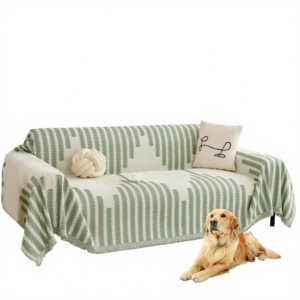
Compare by product form before checking material, size and performance. A fitted slipcover, a draped throw cover and a separate sofa pad solve different fit and merchandising problems.
Sofa Covers & Slipcovers Sofa Throw Covers Sofa Pads & Seat Covers
For wholesale or private-label sourcing, confirm the exact SKU, measurements, quantity, sample terms, MOQ, packaging and production schedule before ordering. Send BOYA your specification.
🛋️ Wholesale Sofa Covers & Home Textiles



📖 Related B2B Fabric & Sourcing Guides
- Build One Closed Loop Before You Build an Ecommerce AI Agent Team```markdown --- title: "Build One Closed Loop Before You Build an Ecommerce AI Agent Team"
- Non-Slip Sofa Covers: Choosing Foam Tucks, Straps or BackingA sofa cover can have foam tucks, elastic straps and an anti-slip backing—and still move.
- Solution-Dyed vs Piece-Dyed Fabric: A Buyer’s Cost GuideThe lower fabric quote is not always the cheaper program. But the more expensive dye
- BOYA DIY Upholstery Stain Removal: Kitchen Solutions for Hotel Housekeeping & Residential UseBefore reaching for chemical cleaners, try these kitchen-ingredient stain removers. They work on most common
- Why Selling ‘Performance Fabric’ Isn’t Selling Fabric at AllWhy Selling 'Performance Fabric' Isn't Selling Fabric at All Walk through any fabric trade show.
- → Browse All 58+ B2B Fabric Sourcing Guides
 Scan QR Code