
Solution-Dyed vs Piece-Dyed Fabric: A Buyer’s Cost Guide
The lower fabric quote is not always the cheaper program. But the more expensive dye route is not automatically the better one either.
For an upholstery buyer, the decision between solution-dyed and piece-dyed fabric depends on exposure, colour range, order volume, replenishment risk and the evidence behind the performance claim. A material that solves a direct-sun problem may create unnecessary inventory or colour-development cost in an indoor seasonal collection.
The useful comparison is therefore not “premium versus standard.” It is which dye route fits the commercial job.
Solution-dyed vs piece-dyed fabric: what actually changes?
Solution dyeing introduces colourant during the manufacture of a synthetic fibre. The coloured polymer is formed into filaments or staple fibre, which are then made into yarn and fabric. This route is commonly considered when colour durability under light, cleaning or chemical exposure is important.
Piece dyeing colours the fabric after it has been woven or knitted. The dye is applied to the textile structure and interacts with the fibre according to the dye class, fibre chemistry, process conditions and finishing route. It is inaccurate to say that piece-dyed colour simply sits on the surface. A well-controlled piece-dye process can produce strong and appropriate colourfastness for many interior applications.
The difference matters because each route places colour decisions at a different stage of production:
| Commercial variable | Solution-dyed route | Piece-dyed route |
|---|---|---|
| When colour is fixed | During synthetic fibre production | After fabric construction |
| Colour flexibility | Often tied to fibre or yarn production quantities and available colour libraries | Often more flexible for fabric-level colour development, subject to mill conditions |
| Performance potential | Can be useful for demanding light or cleaning exposure | Can meet many indoor and contract requirements when fibre, dye and process are correctly selected |
| Inventory exposure | Colour may be committed earlier in the supply chain | Greige fabric may allow later colour allocation in some programs |
| Evidence required | Test result for the proposed fibre, fabric, shade and finish | Test result for the proposed fibre, dye route, shade and finish |
Neither column is a universal winner. The buyer must decide which risk is more expensive: colour-performance failure, or the cost and inflexibility created by committing to colour too early.
Why “solution-dyed never fades” is the wrong buying claim
No responsible fabric specification should promise that a colour can never change. Exposure intensity, duration, shade, fibre, colourant, finish and test method all influence the result. A fabric used beneath a covered balcony does not face the same conditions as a poolside cushion in direct sun.
Solution dyeing can improve the available performance envelope, but the buyer still needs a measurable requirement. Ask:
- Which colourfastness property matters: light, washing, rubbing, perspiration, chlorinated water or another exposure?
- Which test method will be used?
- What result is required for the target market and end product?
- Does the report apply to the exact fibre, construction, colour and finish being quoted?
- Does the supplier’s claim cover the fabric only or the completed upholstered item?
The fade-resistant fabric specification guide explains how to turn a broad UV claim into a testable requirement. For outdoor use, the related indoor versus outdoor upholstery guide adds moisture, cleaning, seams and cushion construction to the decision.
Five costs that do not appear in the price per metre
1. Colour-development commitment
A solution-dyed colour may require commitment at fibre or yarn stage. The relevant minimum, available colour library and development schedule depend on the producer and program. If the buyer needs many low-volume fashion shades, the commercial burden can outweigh the expected performance benefit.
Piece dyeing may offer more flexibility after the greige fabric is prepared, although its own dye-lot minimums and scheduling limits still apply. Do not compare only the finished fabric price. Compare the quantity at which the colour becomes committed.
2. Unsold colour inventory
Colour that is decided early can become stranded inventory when a retailer changes its palette or a marketplace shade underperforms. This is especially relevant for importers launching a broad assortment without reliable sell-through data.
A smaller first order may reduce inventory risk even when the unit price is higher. Conversely, a stable core colour with repeat demand may justify earlier commitment and a more performance-led construction.
3. Claims, returns and replacement exposure
If colour change would trigger warranty claims, negative reviews, renovation downtime or replacement of an entire coordinated set, the cost of failure reaches far beyond fabric value. The buyer should estimate that exposure using its own channel data rather than copying a generic lifespan claim.
For an indoor product with limited light exposure, the same risk may be low. Paying for a specification that customers neither need nor recognise can make the range less competitive without reducing a meaningful failure.
4. Repeat-order shade management
Neither dye route removes the need for colour control. Approved standards, instrument settings, light sources, tolerance language and lot traceability still matter. A technically acceptable shade can still cause a commercial complaint when replacement pieces are placed beside an earlier lot.
Use the dye-lot variation guide to define lab-dip approval, lot separation and replenishment expectations before the first bulk order.
5. Testing and claim documentation
Testing has a cost, but unverified claims are more expensive when they reach packaging, product pages or buyer contracts. Confirm whether an existing report is representative of the proposed material or whether new testing is required. Certificates and reports available through BOYA are verified for the requested SKU and standard.
A better lifecycle-cost calculation
Fixed statements such as “solution-dyed costs 15% more” or “lasts four times longer” are not reliable purchasing rules. The premium and service outcome change with fibre, construction, colour, order volume, finish, supplier and use environment.
Use a project-specific calculation instead:
Expected program cost = landed fabric cost + colour-development cost + testing and approval cost + inventory carrying cost + expected claim or replacement exposure + replenishment mismatch cost.
The point is not to predict ten years with false precision. It is to identify which variables can overturn the apparent saving in the quote.
A simple decision sheet can include:
- price per metre at the planned volume;
- minimum quantity per colour and total colour count;
- unused inventory assumption by colour;
- test and development charges;
- freight and packaging differences;
- expected reorder frequency;
- cost of a customer claim or coordinated replacement;
- value of shorter or more flexible replenishment.
Run the calculation twice: once for the launch order and once for the first reorder. A route that looks efficient at launch can become difficult when one colour needs urgent replenishment and the others do not.
Selection rules for common upholstery programs
Direct-sun outdoor furniture
Solution-dyed synthetic options may deserve priority when the required colourfastness is demanding and the colour range is stable enough to support the production commitment. Approval still depends on the actual test evidence and the rest of the upholstered construction.
Indoor residential collections
Piece-dyed fabric may be commercially sensible when shade agility, texture development and smaller colour commitments matter more than severe exposure performance. Specify the colourfastness and care requirements that the end use genuinely needs.
Hospitality and contract programs
Cleaning chemistry, replacement cycles, window exposure and downtime should drive the choice. A solution-dyed route may help with some conditions, but abrasion, pilling, seam behaviour and cleanability remain separate requirements. The performance fabric evidence guide can be used to map each claim to its own test.
Marketplace colour assortments
Start with the inventory model. If the listing needs many experimental shades, early colour commitment may be the larger risk. A buyer can separate stable core colours from seasonal test colours instead of forcing one dye route across the whole assortment.
What to put in the RFQ
A useful request should give the supplier enough information to recommend a route rather than simply quote a name.
- Fibre and construction: composition, weave or knit, target weight, width, backing and finish.
- End product: fixed upholstery, removable cover, cushion, sofa pad or another form.
- Exposure: indoor or outdoor placement, direct-sun conditions, cleaning agents and moisture contact.
- Colour plan: number of shades, reference standards, forecast by colour and repeat-order horizon.
- Evidence: named colourfastness methods, target results and report scope.
- Commercial terms: sampling, quantity, packaging, target delivery window and reorder expectations.
BOYA can review options within its upholstery fabric collection and confirm which dye routes, processes, samples and supporting documents apply to the selected specification. Custom development and scheduling remain subject to material, colour, quantity and approved production details.
The decision is about risk placement
Solution dyeing moves the colour decision upstream and may improve performance for certain exposures. Piece dyeing can preserve colour flexibility and may be entirely suitable when the requirement and process are correctly defined.
Choose solution-dyed fabric when the verified performance benefit is worth the colour and inventory commitment. Choose piece-dyed fabric when its tested result meets the end use and flexibility has greater commercial value. If neither route is tied to a test method, shade plan and reorder model, the price comparison is incomplete.
Part of the Product Education series
Continue the colour and performance decision path
- Control dye-lot variation before a repeat order
- Specify fade resistance without a vague UV claim
- Match performance claims to testable evidence
Review BOYA’s conditional OEM and development options, or send the end-use, colour plan and target test methods for a project-specific review.
Product family: Sofa Pads & Seat Covers
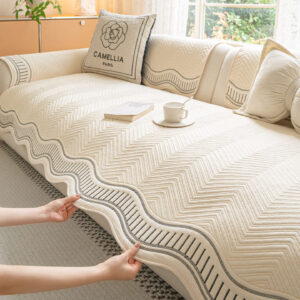
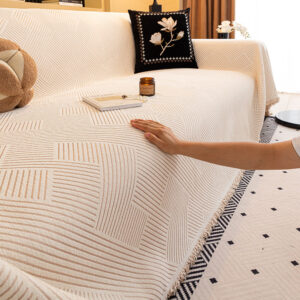
Compare by product form before checking material, size and performance. A fitted slipcover, a draped throw cover and a separate sofa pad solve different fit and merchandising problems.
Sofa Covers & Slipcovers Sofa Throw Covers Sofa Pads & Seat Covers
For wholesale or private-label sourcing, confirm the exact SKU, measurements, quantity, sample terms, MOQ, packaging and production schedule before ordering. Send BOYA your specification.
🛋️ Wholesale Sofa Covers & Home Textiles

📖 Related B2B Fabric & Sourcing Guides
- Amazon New Product Budgeting: Research, Validation and ScaleAn Amazon launch budget should not be released all at once. Early-stage uncertainty is high,
- Sustainable Upholstery Fabric: rPET, Bio-Based, and What Actually Works for B2B BuyingAccording to Boya Textile, the sustainable fabric movement isn't a trend — it's reshaping how
- When to Stop an Amazon Product Test: Five Practical Stop-Loss SignalsProjects rarely continue because the data is excellent. They continue because every weak result can
- 50 Questions to Ask a Fabric Supplier in China Before OrderingMost lists of questions to ask a fabric supplier in China are long enough to
- Low Amazon Conversion: Diagnose the Listing Before Increasing Ad Spend```yaml --- title: "Low Amazon Conversion: Diagnose the Listing Before Increasing Ad Spend" date: "2026-08-23"
- → Browse All 58+ B2B Fabric Sourcing Guides
 Scan QR Code