Stock vs Custom Sofa Covers: A Sourcing Decision Guide
Ready stock and custom production solve different uncertainties.
Stock lets a buyer test demand while keeping the product largely unchanged. Custom production gives the buyer more control over the product, but also transfers more decisions—and more forecasting risk—to that buyer.
The useful question is not “Which option is better?” It is “Which uncertainty should this order resolve?”
Three sourcing paths, not two
Most sofa-cover projects fit one of three paths.
| Path | What remains standard | What the buyer controls | Best use |
|---|---|---|---|
| Ready stock | Existing SKU, color, construction and size | Order mix and, where available, packaging choices | Demand testing and quick assortment gaps |
| Modified stock | Existing base material or construction | Selected changes such as label, packaging, size or color | Early brand differentiation without rebuilding the product |
| Full custom | Only the agreed manufacturing constraints | Material, pattern, color, dimensions, processes, branding and packaging | Repeat programs, exclusive designs and furniture-specific fit |
Modified stock is the path buyers often miss. It can preserve a proven base construction while adding only the change that matters commercially. Feasibility, minimums and schedule still depend on the selected item and approved modification.
Ready stock reduces commitment, not due diligence
A stock item already has a defined specification. This reduces development work, but it does not remove the need to verify the exact SKU.
Before ordering, confirm:
- SKU, color, dimensions and pieces per set;
- available quantity for the planned order;
- whether all pieces come from a compatible production batch;
- backing, edge finish, care and packaging;
- sample terms and the sample-to-bulk reference;
- dispatch schedule for that quantity and destination;
- whether replenishment is expected or the item is being cleared.
The main advantage is reversibility. A buyer can test a smaller assortment without funding an entire development program. Zero MOQ may be available for eligible BOYA stock items, but eligibility and available quantity are confirmed by SKU.
The limitation is control. A stock color may also be sold to other buyers. Availability may change. A later batch may need to be checked against the approved reference. If exclusivity or a fixed long-term specification is central to the business model, stock alone may not be enough.
Custom production creates control—and approval work
Custom production becomes useful when a commercial requirement cannot be met by an existing SKU. That requirement might be a furniture-specific size, proprietary pattern, coordinated color system, different backing, retail pack, logo or documented performance scope.
The buyer must then approve the variables that stock production had already decided:
- material composition and construction;
- finished GSM, hand feel and color reference;
- dimensions, tolerances and set configuration;
- edge, backing, printing, embroidery or other applicable processes;
- care instructions and planned listing claims;
- label, fold, compression and outer packaging;
- sample revision and bulk-production reference;
- quantity, inspection and change-control terms.
That control is valuable only when the approval record is precise. “Make it softer” or “match the photo” is not a production specification.
BOYA custom production typically takes 10–20 days after the specification and production schedule are confirmed. Sampling, buyer approval and international transit sit outside that production range. The current plan must therefore be built around milestones rather than one headline lead-time number. The guide to material, approval, production, QC and shipping stages explains the distinction.
Compare the cost of being wrong
Unit price captures only one part of the decision.
For a stock order, add the cost of:
- selling a style that is easy for competitors to source;
- rebuilding a listing if replenishment stops;
- managing a broad assortment of small SKUs;
- checking color and construction when a later batch changes.
For a custom order, add the cost of:
- sample development and internal approval time;
- minimum inventory by item, color or size;
- tooling, artwork, testing or packaging setup when applicable;
- forecast error after the product has been committed;
- revision delays caused by an incomplete brief.
A stock SKU can be more expensive per piece and still be cheaper for an uncertain launch. A custom SKU can require more work and still be cheaper for a repeat program that needs differentiation and stable specifications.
Normalize the offers before deciding. The fabric-quote comparison worksheet aligns dimensions, material, quantity, Incoterm, processes and packaging on one commercial basis.
Choose by the decision stage
Use ready stock to learn what sells
Stock is usually the stronger path when the buyer is still testing color, texture, size distribution, price point or channel response. The order should be designed to answer a small number of questions. An assortment with too many near-identical SKUs creates inventory noise instead of evidence.
Use modified stock when one change carries the brand value
A standard base with custom label, packaging, size or selected color can be sufficient when the product construction already works. The buyer avoids changing variables that customers do not value.
Confirm whether the requested modification changes MOQ, sample scope, packing method or schedule. Logo customization, printing, embroidery, jacquard, edge processes and performance finishes depend on the product and approved construction.
Use full custom when the specification must be owned
Custom is appropriate when the product must match a particular sofa frame, brand palette, pattern system, performance requirement or repeat-order specification. It is also appropriate when the value proposition would disappear if another seller could buy the same item unchanged.
Custom is less appropriate when the buyer has no demand signal, no size plan, no approval owner or no realistic quantity forecast.
When should a stock winner become custom?
Conversion should follow evidence, not enthusiasm. A stock SKU is a candidate for custom development when:
- sales repeat across more than one buying cycle;
- the winning color and size distribution are clear;
- reviews or inquiries reveal one fix worth owning;
- the expected volume can support the project-specific minimum;
- the margin can absorb development and approval costs;
- the buyer can forecast replenishment and hold a specification.
Do not customize every field at once. Change the variable connected to the commercial opportunity. If the stock construction performs well but the size matrix causes returns, start with size. If the item fits but looks generic, start with color, pattern or packaging.
Approval separates a custom idea from a repeatable SKU
A sample is not merely a visual reference. It should close the decisions that will control production.
Record the approved material, color, dimensions, construction, backing, edge, branding, packaging, care language and evidence scope. Identify which fields may vary within an agreed tolerance and which require written reapproval.
Sample availability, product charge, courier and customization terms are confirmed for the specific request. Use the sample-economics and approval guide to decide which sample type is needed before committing to production.
A practical route-selection scorecard
| Question | Ready stock signal | Custom signal |
|---|---|---|
| Is demand proven? | No or weak evidence | Repeat demand with a forecast |
| Must the product be exclusive? | No | Yes, with written scope |
| Does an existing size fit? | Yes | No; frame-specific dimensions needed |
| Can the buyer approve specifications? | Minimal approval capacity | Named owner and documented process |
| Can quantity support development? | Small trial is the priority | Project minimum is commercially workable |
| Is launch timing flexible? | Current availability is more important | Development and approval can be scheduled |
| Is long-term reorder control required? | Not yet | Yes |
If the signals are split, use modified stock or divide the assortment: stock for testing and replenishment, custom for the small number of products that carry the brand story.
What to include in the sourcing request
Send the supplier a product form, reference image, sofa dimensions, target material, size plan, market, quantity per SKU, branding, packaging and required milestones. Then ask for three clearly labelled routes where applicable: ready stock, modified stock and custom.
Each route should state the exact SKU or proposed specification, MOQ, sample scope, commercial basis and schedule. That makes the decision auditable instead of relying on a catalog label.
Frequently asked questions
Is a stock sofa cover lower quality than a custom one?
No. Stock and custom describe how the specification is selected, not a quality grade. Quality must be evaluated against the construction, approved sample, evidence and intended use.
Can a stock product carry custom branding?
It may be possible to add labels or packaging to an existing item. Availability, minimums, artwork, sample requirements and schedule are confirmed for the SKU and branding plan.
Does custom production guarantee exclusivity?
No. Exclusivity requires a written agreement defining the protected design, market, period and commercial conditions. A customized color or package does not automatically create broad exclusivity.
How should a buyer compare stock and custom quotations?
Use the same finished-product specification and commercial basis, then add development, samples, packaging, inventory commitment, logistics and approval work. Keep stock availability and custom production milestones in separate fields.
BOYA maintains 1,000+ ready-stock SKUs and supports project-specific customization. The applicable stock route, zero-MOQ eligibility, sample terms, processes, documentation and schedule are verified for the selected product and request. Review the available OEM and customization capabilities, or send a project brief for route confirmation.
Product family: Sofa Covers & Slipcovers
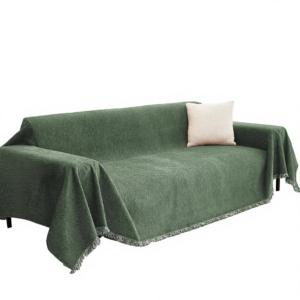
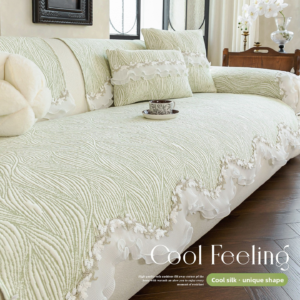
Compare by product form before checking material, size and performance. A fitted slipcover, a draped throw cover and a separate sofa pad solve different fit and merchandising problems.
Sofa Covers & Slipcovers Sofa Throw Covers Sofa Pads & Seat Covers
For wholesale or private-label sourcing, confirm the exact SKU, measurements, quantity, sample terms, MOQ, packaging and production schedule before ordering. Send BOYA your specification.
🛋️ Wholesale Sofa Covers & Home Textiles

📖 Related B2B Fabric & Sourcing Guides
- Your Best Sofa Fabric Gets the Most Returns. Here’s Why.Your Best Sofa Fabric Gets the Most Returns. Here’s Why. Here’s a paradox that drives
- Natural Textiles Are Not More Expensive — Your Supplier Is Just Buying Them WrongBiophilic design is about visual and tactile connection to nature — not about material purity.
- Why One Winning Amazon Product Is Not a Growth SystemA successful Amazon listing can change a business. It creates cash flow, validates a market
- Color Strategy for Sofa Cover Listings: Gray Sells, But Gray Alone Is Not a LineYou are an Amazon seller preparing to launch a new sofa cover line. You pull
- AI Textile Sourcing for Furniture Brands: A Human-Controlled WorkflowA furniture brand can receive an AI-generated sourcing brief that looks complete and still approve
- → Browse All 58+ B2B Fabric Sourcing Guides
 Scan QR Code